LearnFind a teacherTools
Music Library
Song NotationsBlogs
  1. HOME
  2. /
  3. Find teacher
    /
    Arougya Thami
    /
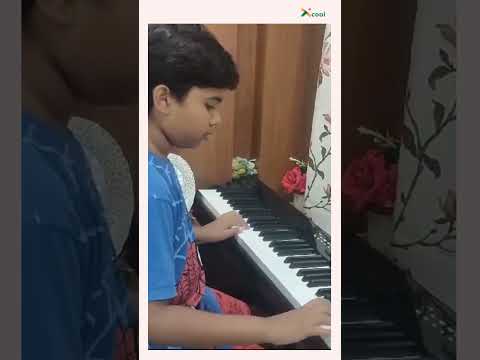
    Keyboard for Trinity Grade 3

Keyboard for Trinity Grade 3 by Arougya Thami

4.5(108)

    This 24-hour intermediate online course offers one class per week, led by our highly experienced and skilled instructors. Enhance your skills with personalized guidance and take the next step in your certification journey with confidence!

    1. Music Notation & Theory

    • Reading and interpreting complex musical notation with accidentals, key signatures, and rhythmic patterns.
    • Understanding ties, slurs, dotted rhythms, and syncopation.
    • Recognizing dynamic markings, articulation symbols, and expressive terms.
    • Identifying chord inversions and basic harmonic analysis.


    2. Keyboard Exercises

    • Students should play one of the following scales in the right hand (RH), accompanied by chords I, IV, V7, and VI in the left hand (LH):
    • A major
    • G harmonic minor


    3. Scales & Chord Knowledge


    Scales (hands separately):

    • G minor (candidate’s choice of harmonic, melodic, or natural minor)
    • A major
    • Mixolydian scale on A
    • Dorian scale on G
    • A major pentatonic
    • G minor pentatonic
    • Blues scale on G


    Chromatic scales:

    • In similar motion starting on G and A
    • Chords in root position, first and second inversions:
    • E7
    • D7


    Chord progression I-VI-IV-V7-I in the following keys:

    • A major
    • G minor


    4. Repertoire

    • Perform three contrasting pieces from the Trinity Grade 3 syllabus, focusing on:
    • Accurate rhythm, tempo, and articulation.
    • Expressive phrasing with dynamics and musical sensitivity.
    • Demonstrating appropriate style and character of each piece.
       

    5. Sight Reading

    • Candidates will be given 30 seconds of preparation time.
    • Perform a previously unseen musical extract at a level approximately two grades lower than the exam being taken.


    6. Aural Skills

    • Answer questions based on a single musical example played by the examiner.
    • Identify:
    • Changes in pitch, rhythm, and dynamics.
    • Recognition of melodic and rhythmic patterns.
    • Basic harmonic and interval recognition.


    7. Hanon Exercises

    • Hanon Exercise No. 5 or 6:
    • Focus on finger strength, agility, and coordination.
    • Practice with both legato and staccato articulation.


    8. Practice Tips

    • Break larger pieces into smaller sections and practice hands separately before combining.
    • Focus on smooth transitions between chords and accurate fingering.
    • Pay close attention to dynamics and articulation for expressive performance.
    • Use a metronome to maintain consistent tempo and rhythm.


    9. Assessment Methods

    • Performance evaluation based on repertoire, sight-reading, and aural skills.
    • Graded on accuracy, musicality, and technical proficiency.
    • Assessed on fluency, expression, and confidence during the exam.

    This 24-hour intermediate online course offers one class per week, led by our highly experienced and skilled instructors. Enhance your skills with personalized guidance and take the next step in your certification journey with confidence!

    1. Music Notation & Theory

    • Reading and interpreting complex musical notation with accidentals, key signatures, and rhythmic patterns.
    • Understanding ties, slurs, dotted rhythms, and syncopation.
    • Recognizing dynamic markings, articulation symbols, and expressive terms.
    • Identifying chord inversions and basic harmonic analysis.


    2. Keyboard Exercises

    • Students should play one of the following scales in the right hand (RH), accompanied by chords I, IV, V7, and VI in the left hand (LH):
    • A major
    • G harmonic minor


    3. Scales & Chord Knowledge


    Scales (hands separately):

    • G minor (candidate’s choice of harmonic, melodic, or natural minor)
    • A major
    • Mixolydian scale on A
    • Dorian scale on G
    • A major pentatonic
    • G minor pentatonic
    • Blues scale on G


    Chromatic scales:

    • In similar motion starting on G and A
    • Chords in root position, first and second inversions:
    • E7
    • D7


    Chord progression I-VI-IV-V7-I in the following keys:

    • A major
    • G minor


    4. Repertoire

    • Perform three contrasting pieces from the Trinity Grade 3 syllabus, focusing on:
    • Accurate rhythm, tempo, and articulation.
    • Expressive phrasing with dynamics and musical sensitivity.
    • Demonstrating appropriate style and character of each piece.
       

    5. Sight Reading

    • Candidates will be given 30 seconds of preparation time.
    • Perform a previously unseen musical extract at a level approximately two grades lower than the exam being taken.


    6. Aural Skills

    • Answer questions based on a single musical example played by the examiner.
    • Identify:
    • Changes in pitch, rhythm, and dynamics.
    • Recognition of melodic and rhythmic patterns.
    • Basic harmonic and interval recognition.


    7. Hanon Exercises

    • Hanon Exercise No. 5 or 6:
    • Focus on finger strength, agility, and coordination.
    • Practice with both legato and staccato articulation.


    8. Practice Tips

    • Break larger pieces into smaller sections and practice hands separately before combining.
    • Focus on smooth transitions between chords and accurate fingering.
    • Pay close attention to dynamics and articulation for expressive performance.
    • Use a metronome to maintain consistent tempo and rhythm.


    9. Assessment Methods

    • Performance evaluation based on repertoire, sight-reading, and aural skills.
    • Graded on accuracy, musicality, and technical proficiency.
    • Assessed on fluency, expression, and confidence during the exam.

  • Perform scales, chords, and harmonic progressions with technical fluency.
  • Demonstrate musical expression and interpretation in repertoire pieces.
  • Improve sight-reading and aural recognition abilities.
  • Be fully prepared to appear for the Trinity Grade 3 Keyboard Exam.

Trinity College London

Course Highlights

Features

Expert-designed curriculum

Access to textbook, audio & video resources

Outcome oriented course design

₹ /session

Free demo

Get to know the Teacher

Discuss what you would like to learn

Free

See what they've learned

YouTube video thumbnail