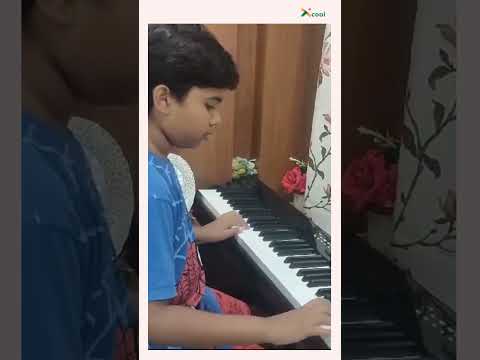
Piano for Trinity Grade 3 by Kamran Mustafa
- Eb major, A major, C minor, F# minor (harmonic or melodic, candidate's choice).
- Chromatic scale in similar motion starting on F#.
- Eb major contrary motion scale.
- Compound time: Time signatures of 6/8, 9/8, and 12/8.
- Dotted quavers and dotted quaver rests in simple and compound time.
- Bb, D major; G, B minor (identifying and recognizing in pieces).
- Understanding tones, semitones, and chord progression basics.
- Three contrasting pieces from the Trinity Grade 3 syllabus, selected to showcase a variety of styles and techniques.
- Emphasis on developing phrasing, dynamics (crescendo, decrescendo), and articulation (marcato, staccato, legato).
- Dynamic and Articulation Marks: Marcato, semi-staccato (symbols and abbreviations).
- Tempo, Expression Marks, and Other Words: Al, alla, a tempo, con, da Capo al Fine, dolce, leggiero, poco, tranquillo, vivo, etc.
- Identify the tonality of a piece as major or minor.
- Recognize and identify intervals by number (second, third, fourth, fifth, or sixth)
- Set Goals: Plan each practice session with clear objectives, such as mastering a specific passage, improving dynamics, or perfecting scales.
- Short and Focused Sessions: Break practice into manageable 20–30 minute intervals to maintain focus and productivity.
- Consistent Routine: Practice daily, even if only for a short time, to build muscle memory and improve fluency.
- Warm Up First: Start with simple scales or exercises to loosen your fingers and set the tone for focused practice.
- Enhance agility and control with Hanon No. 1–4, incorporating gradual speed increases.
This 24-hour intermediate online course offers one class per week, led by our highly experienced and skilled instructors. Enhance your skills with personalized guidance and take the next step in your certification journey with confidence!
1. Technical Work Scales:
Hands Together (Two Octaves):
Arpeggios: Eb, A major; C, F# minor (hands separately, two octaves).
2. Musical Theory Rhythm and Note Values:
Key Signatures and Intervals:
Clefs and Ledger Lines: Naming and using notes in treble or bass clefs (to three ledger lines above or below the stave).
3. Repertoire Pieces
4. Musical Words and Symbols
5. Aural Training
6. Practice Tips
- Perform Grade 3 repertoire with precision, dynamic control, and stylistic accuracy.
- Understand and apply compound time, dotted rhythms, and chord progressions.
- Demonstrate technical fluency in scales, arpeggios, and sight-reading exercises.
- Identify tonalities and intervals accurately through aural recognition exercises.
Trinity College London
Course Highlights
Features
Expert-designed curriculum
Access to textbook, audio & video resources
Outcome oriented course design
Free demo
Get to know the Teacher
Discuss what you would like to learn
See what they've learned